Texts and calls
Scam texts, sorted by the message you actually got
Updated 6 September 2026
Text scams work by volume. A few million messages go out, most get ignored, and the tiny fraction that land pay for the whole operation. That means the same handful of scripts circulate for months, which is good news for you: whatever you just received, it almost certainly matches one of the patterns below.
Money and government pressure
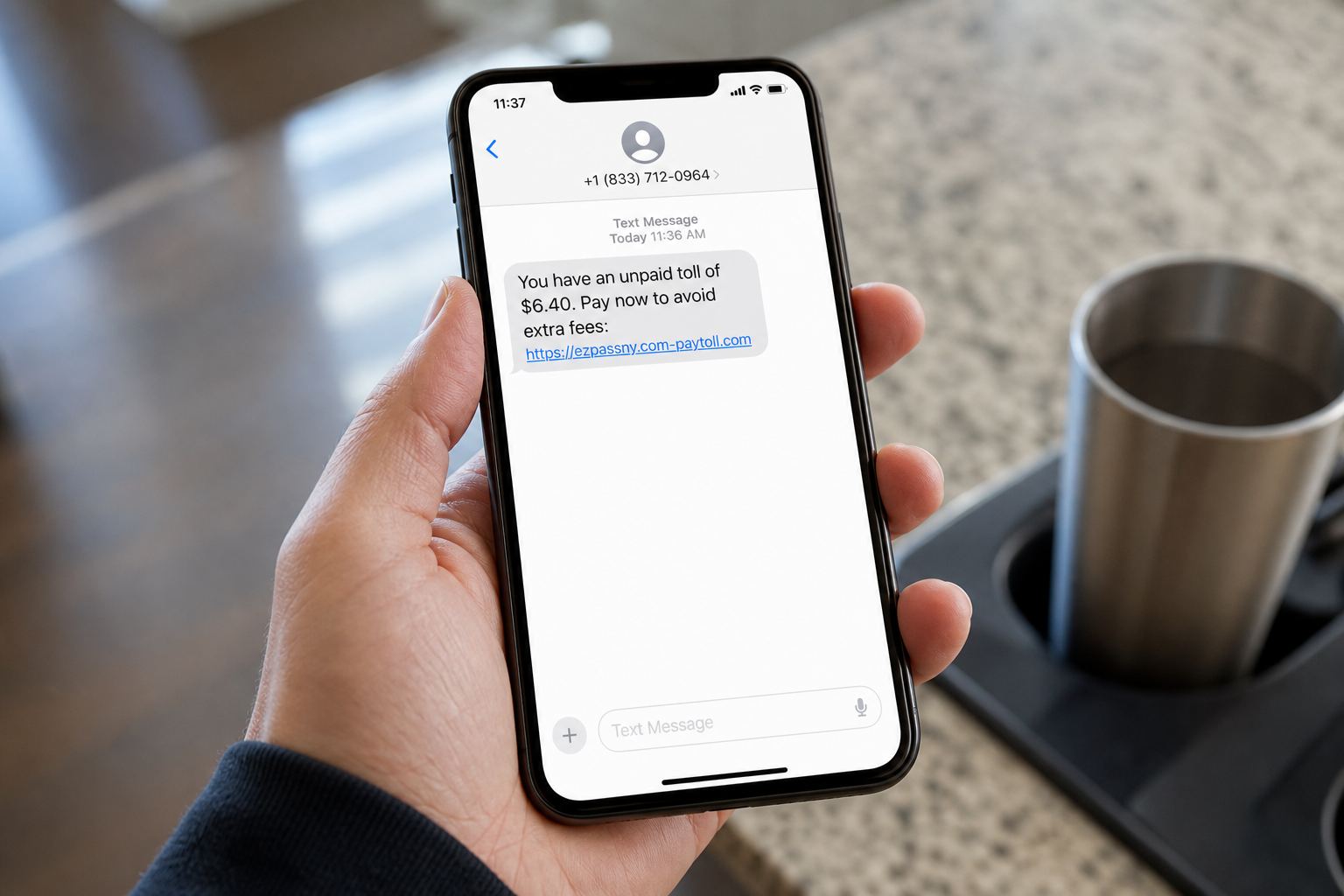
These use a small fine or fee plus a deadline. The amounts are deliberately low, because a $6.99 charge feels easier to pay than to dispute.
Your account has a problem
Impersonating a service you actually use, so the message arrives with built-in plausibility. The tell is nearly always the link, not the wording.
- Bank fraud alert, reply YES or NO
- Zelle or Venmo problem
- Netflix payment failed
- Apple ID locked or storage full
- Driver can't confirm your address
Someone wants to talk to you
The slow ones. No link, no urgency, just a conversation that goes somewhere expensive weeks later.
- A friendly wrong number
- Unsolicited job offer
- Mum has a new number
- IRS or Social Security call
- Paid-to-click task work
- Crypto recovery service
The one habit that beats all of them
Never act inside the message. Not on the link, not on a reply, not on a phone number the text gives you. If a text says your toll is unpaid, open your toll account yourself. If your bank flags a charge, use the number on your card. Every one of these scams needs you to stay inside the channel it controls, and stepping outside it ends the scam every time, without you needing to spot a single typo.
If the message contained a QR code rather than a link, check where it goes without scanning it. If you already tapped and typed something in, go straight to the recovery steps, or if you typed a card. And if you're wondering how they got your number in the first place, that has a fairly boring answer.
Quick answers
- Can I reply STOP?
- On a real short code, sometimes. On a random SMS you just confirmed the number is live.
- They called after the text.
- Use the safe-word page and the IRS page. Do not call them back.
This is general safety information, not legal advice. Scams change. If you need an official desk: FTC ReportFraud or IC3.