Texts and calls
Unsolicited job offer texts and the interview that's only a data grab
Updated 6 September 2026
"Your resume on file." That's the phrase carrying the weight, because it makes a cold text read like the continuation of something you already started. It isn't. Resumes posted to job boards get scraped and resold in bulk, so a recruiter who texted you out of the blue knows nothing that isn't for sale. And if the interview is going to happen entirely inside WhatsApp or Telegram, it isn't a job. It's one of two things: a fake check they need you to deposit and forward, or an onboarding form built to collect your Social Security number, date of birth and a photo of your driver's license. The interview is real theater with a script. The company name is often real too, which is the whole point, because you'll check the company and the company will look fine.
- 1Indeed says it never sends job offers by text or social media.
- 2'Resume on file' sounds personal, but scraped resumes are bought and sold.
- 3$25-40/hr, remote, flexible, start Monday: specific but not absurd bait.
- 4Moved to WhatsApp fast - no employer audit trail, no platform moderation.
Indeed, ZipRecruiter, and pay that stops just short of absurd
Almost always it claims to come from a hiring platform or a brand you'd want to work for. Indeed and ZipRecruiter get impersonated constantly, as do consumer names like Netflix, Apple and Amazon. Indeed has stated publicly that it never contacts jobseekers with employment offers by text message or social media, which is a useful sentence to keep in your head.
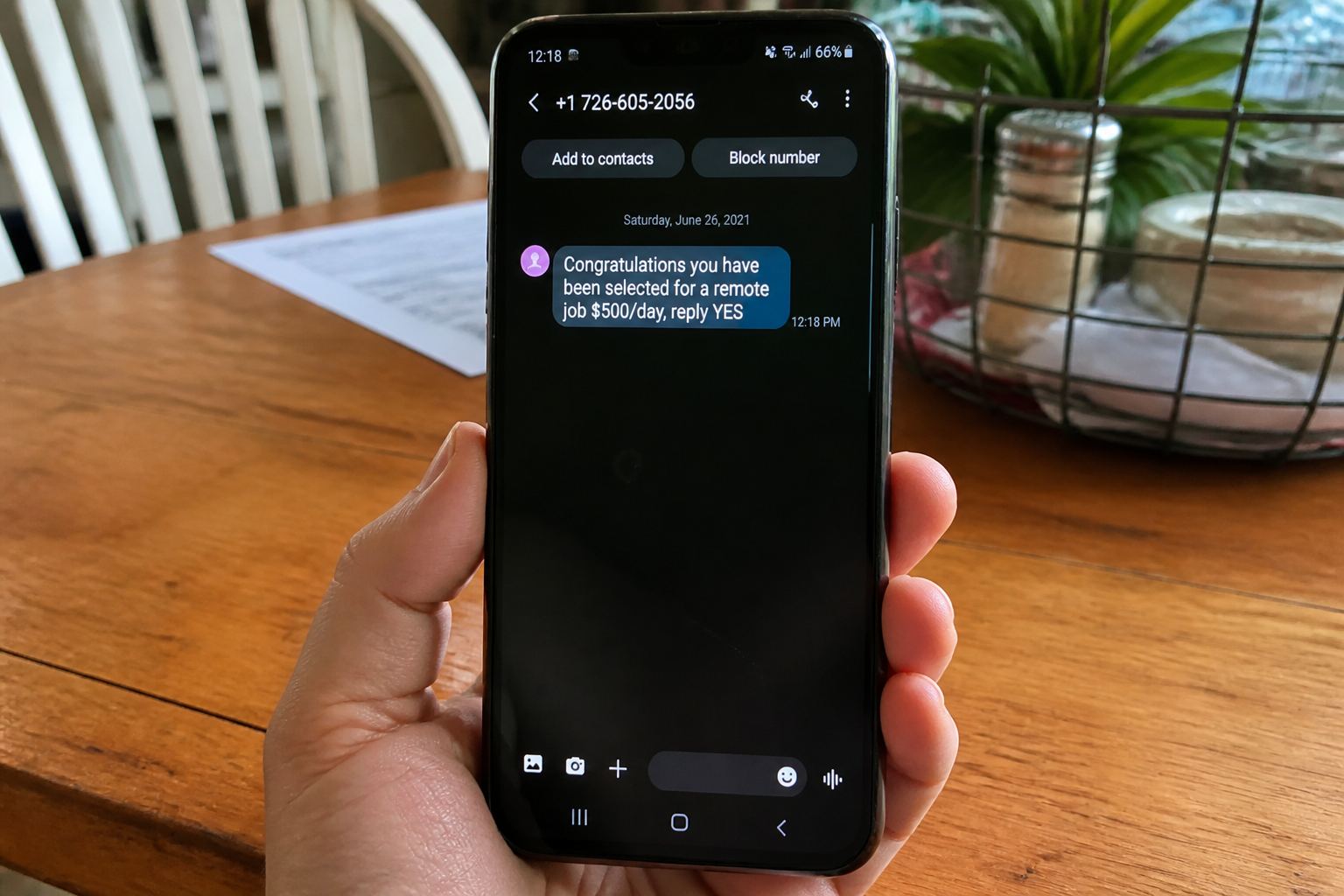
The pay is specific but not absurd. Twenty-five to forty dollars an hour, remote, flexible, start Monday. Duties stay vague. There's often a reference to "your resume on file," which sounds like something only a real recruiter would know, except that resumes posted to job boards are widely scraped and resold. Text-based job scam reports to the FTC went from 4,872 in 2020 to 20,673 in 2024, and reports of online job scams in the first half of 2025 were up 19 percent year over year, with losses approaching $300 million.
The interview that never leaves the chat window
You get moved off SMS quickly, usually to WhatsApp, Telegram or Signal, framed as the team's normal tool or as "more secure." The real reason is that those apps leave no employer audit trail and no platform moderation to trip over.
Then comes the interview, typed. Six or eight questions, generic enough to fit any role, answered over twenty minutes. Everyone passes. An offer letter arrives as a PDF with a real logo on it within the hour, sometimes at a starting salary higher than the ad mentioned. Video calls do exist in some versions, including ones using synthetic faces, but text-only is far more common because it's cheap and it scales. I couldn't find solid figures on how often deepfaked video interviews actually show up in consumer job scams, so treat any breathless statistic on that as unverified.
One detail worth flagging: a two minute voice note gives someone enough audio to build a usable clone of your voice. That's a separate risk from the job scam itself, and it's why agreeing a family safe word is cheap insurance. If you want the mechanics, see how AI voice cloning scams work.
The equipment check, which is the expensive version
Here's the sequence. You're hired. The company will provide a home office setup, so they mail or email you a check for $3,800 to cover a laptop, monitor and software. You're told to deposit it and pay their "approved vendor" the moment it clears, usually by Zelle, wire, gift card or crypto. Speed is always stressed.
The check is counterfeit. Your bank makes the funds available within a day or two because federal funds availability rules require it, but availability is not the same as a check having cleared. Discovering a forgery can take weeks. When it comes back, the bank pulls the money out of your account, and because you deposited it, you're the one who owes it. People end up thousands of dollars overdrawn, and accounts sometimes get closed and reported.
No legitimate employer sends you money to buy your own equipment from a vendor they picked. Companies buy their own laptops. Where reimbursement happens, it happens after you've spent your own money, through payroll or an expense system, weeks later.
The onboarding form that's the real product
The quieter version skips the money entirely. You accept the offer, and a packet arrives: a W-4, an I-9, a direct deposit authorization, sometimes a background check consent. It looks right because those are real forms and the scammers use the actual IRS PDFs.
What they're collecting is a complete identity: full legal name, Social Security number, date of birth, address, bank routing and account numbers, and a scan of your ID. That set is enough to file a fraudulent tax return in your name, open credit, or take a job under your number. The Identity Theft Resource Center's 2026 trends report found fraudulent employment made up roughly 5 percent of all identity misuse cases it handled, and about 40 percent of the cases involving minors, which tells you how sellable this data is.
Timing is the tell. A real US employer asks for your SSN after a written offer, on tax and work eligibility paperwork, and usually inside a named payroll system like ADP, Workday or Paylocity that you log into with your own credentials. Not a Google Form. Not a PDF you email back. Not a photo of your Social Security card sent over WhatsApp, ever.
Checks that take two minutes and settle it
- Verify sideways, not through them. Type the company name into a search bar yourself, open the careers page, and call the main switchboard number listed there. Never use a phone number, link or email address the recruiter supplied.
- Read the email domain character by character. Real recruiters write from the company domain. Free Gmail addresses, and lookalikes with an extra letter or a swapped country code, give it away.
- Ask for a video call on the company's own system. A real hiring manager will do it. A scammer produces a reason not to.
- If they send a QR code for the group chat or the "portal," check where that code leads before you scan it.
- Nobody legitimate charges you for training, certification, a background check, or a starter kit. That rule has no exceptions in US hiring.
If you already sent your Social Security number
Don't panic, but move this week rather than next month. Start at IdentityTheft.gov, the FTC's site, which builds you a personal recovery plan and an official identity theft report you'll need later. The FTC also takes reports by phone at 1-877-438-4338.
Freeze your credit at all three bureaus. It's free under federal law, it doesn't touch your credit score, and the bureaus have to apply it within one business day when you ask online or by phone. Equifax is 1-888-298-0045, TransUnion is 1-800-916-8800, Experian is 1-888-397-3742. A freeze at one does not carry to the others, so do all three.
Get an IRS Identity Protection PIN. Any taxpayer with an SSN or ITIN can request one through the "Get an identity protection PIN" tool on irs.gov, and it blocks someone filing a return in your name. Then log into your account at ssa.gov and read your earnings record for employers you never worked for, which is how employment identity theft surfaces. If you handed over bank account numbers, call the bank and ask them to flag the account or issue new numbers.
If you deposited their check
Call your bank now and say you believe you deposited a counterfeit check. Send nothing onward, however hard the "vendor" pushes. If the check arrived by mail, that's mail fraud, and the US Postal Inspection Service takes reports at uspis.gov or 1-877-876-2455.
The related pattern, where the "job" is real clicking on a fake platform and the money goes out in crypto instead of checks, is covered in task scams and the get paid to like videos job. Different mechanism, same recruiting text, sometimes the same phone numbers. A third version hires you to receive boxes at home and mail them on with labels the company sends you. The Postal Inspection Service says a job like that is most likely a scam, and our page on counterfeit stamps and shipping labels explains where those labels come from.
Job hunting already requires handing personal details to strangers who asked for them. Real employers ask for a Social Security number. Real employers ask for a scan of an ID and a bank routing number. This scam asks for the same things, in the same order, through a different channel.
Quick answers
- The company name is real.
- Anyone can type a name. Apply on the career page you type yourself.
- They already “paid” me.
- Do not refund a fake deposit.
This is general safety information, not legal advice. Scams change. If you need an official desk: FTC ReportFraud or IC3.