About us
How to get your name and address off people-search sites
Updated 6 September 2026
Free removal works. Permanent removal doesn't exist. You can pull your name and home address off most of the big people-search sites yourself in about two hours, at no cost, and then the brokers re-scrape the same public records and marketing files on their refresh cycle and rebuild some of what you deleted. So removal is a maintenance habit rather than a one-time fix.
That's the honest summary. What follows is the order I'd work in, the one government tool that's genuinely new, and a straight answer on whether paying someone is worth it.
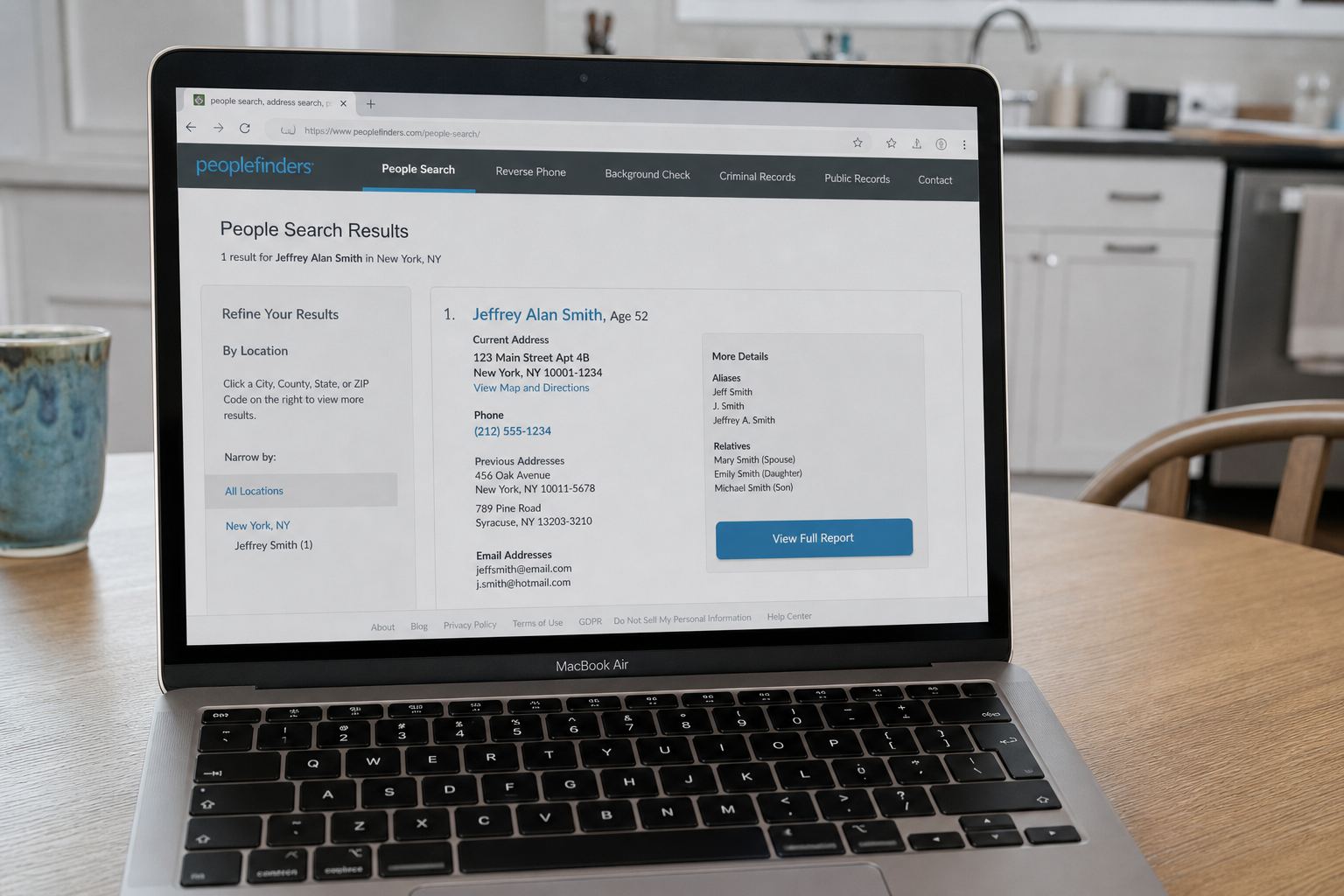
Why it's legal for them to publish your address
Almost everything on a people-search profile came from somewhere public or somewhere you agreed to without reading. County recorders publish property deeds and sale prices. Courts publish case filings. Most states release the voter file, and depending on the state that can include your address, your party, and sometimes a phone number. Marriage licenses, business registrations, professional licenses, and bankruptcy records sit in the open too.
The commercial half arrives from loyalty programs, warranty cards, sweepstakes entries, and the advertising code buried in ordinary phone apps. Then there are breach dumps. The 2024 National Public Data leak alone pushed roughly 2.9 billion records into circulation, including names, phone numbers, address histories, relatives, and Social Security numbers going back decades.
Here's the legal move that keeps these sites operating: they insist they aren't consumer reporting agencies. Their terms of service tell you not to use results for hiring, credit, housing, or insurance decisions. That disclaimer is what keeps them outside the Fair Credit Reporting Act's accuracy and dispute rules. It's a thin argument, I don't much like it, and it has held up for years.
What removal actually accomplishes
Opting out works. Your profile disappears from search results on that specific site, usually within 24 to 72 hours, and often faster on the smaller ones. What it doesn't do is touch the underlying source. Your deed is still filed at the county. Your voter registration is still your voter registration.
So the profile comes back. Not always, not everywhere, but often enough that anyone promising permanent removal is selling you something. Plan on rechecking every three to six months and re-filing where needed. Some sites are worse than others about it, and Radaris has the worst reputation for relisting people who already opted out.
If you live in California, start with DROP
California built the only single-request system in the country. It's called the Delete Request and Opt-Out Platform, it lives at privacy.ca.gov/drop, and it's run by the California Privacy Protection Agency. It's free, and the agency says plainly it will never charge you.
You verify California residency either by entering your details manually or through Login.gov, submit one deletion request, and get a tracking ID. That single request reaches every data broker registered with the state, which is more than 500 companies. Consumer submissions opened on January 1, 2026. Brokers were only required to start honoring them on August 1, 2026, after which they must pull new requests from the platform at least every 45 days and complete deletions within 90 days.
That enforcement date was five days ago as I write this, so nobody honestly knows yet how well compliance will hold up. Submit anyway. It costs you nothing and it covers ground no manual opt-out list can.
Outside California there's no equivalent. Texas, Oregon, and Vermont maintain broker registries, but a registry just tells you who exists; none of the three gives you one button. Vermont's is the oldest and grants no deletion right at all. If you're in one of those states you still have to file individually, though most large brokers run a single opt-out form nationwide rather than checking your ZIP code first.
The eight sites, in the order I'd work them
Two sites take about five minutes each and don't make you create an account. Begin with TruePeopleSearch and FastPeopleSearch, because they're the ones that tend to rank highest when somebody searches your name.
The next tier wants to verify you first. Whitepages confirms by phone call or text message, Spokeo emails you a link you have to click, and BeenVerified also sends a confirmation email. None of these process anything until you finish that step, which is exactly where most people give up without realizing it.
Save the stubborn ones for last. Radaris and Intelius both work but take longer. MyLife is the worst of the group, with no dependable self-serve form, so the practical route there is email or a phone call.
A few rules that save grief. Use a real email address you'll keep, not a burner that expires before the confirmation link arrives. If a site demands phone verification and you'd rather not hand over your main number, a free Google Voice number usually works. Don't create an account on a people-search site if a form will do. And if any of them asks for money to remove you, close the tab, because opting out is free everywhere on this list.
Are paid removal services worth it?
Sometimes. DeleteMe runs around $129 for a year at list price, and Incogni is roughly $95.88 billed annually. Prices shift, so check before buying.
Ignore the coverage numbers. One vendor claims 750 sites, another claims 420, and independent reviewers can't agree on either figure. What you're really paying for is recurrence: somebody re-files the requests when your listing reappears, which is the part almost nobody does on their own.
For most people I'd skip it and do the eight sites above, then set a calendar reminder for three months out. I'd pay if you've been stalked or harassed, if your work makes you a target, or if you know yourself well enough to admit you'll never do the recheck. That last reason is the most common honest one.
Why this matters for packages and phone calls
An address that's easy to look up is raw material. Unordered parcels arriving with your name on them are usually a brushing operation, where a seller ships cheap junk to a real address so it can post a verified review. Many of those parcels now include a card telling you to scan a QR code to see who sent it, which is a separate scam entirely.
The nastier use is social. People-search profiles list your relatives by name and age, which is precisely what a caller needs to sound like they know your family. Add a few seconds of audio scraped from a public video and you get an AI voice clone call about a nephew in jail. Opting out helps a bit. A family safe word helps far more, because it still works when the caller has every other detail right.
What removal won't fix
It won't undo a breach. Once your record is in a dump that's been copied a thousand times, there is no delete button anywhere on Earth for it. Removal also won't stop scam calls, since criminals don't consult opt-out lists, and it won't clear county property records or court filings.
What it does do is raise the cost of finding you casually, which is most of what these sites enable. If you want the fuller picture of how your details got into circulation in the first place, that's covered in how scammers got your phone number and address. Do the eight opt-outs, file with DROP if you're eligible, recheck quarterly, and let the rest go. Opinion, and plenty of sensible people disagree with me on it: the burden here is backwards. A company that publishes your address without asking should have to earn the right to keep it up, not make you fill in a form every quarter to take it down.
Quick answers
- Will texts stop?
- Some will. Not all.
- Is a paid service required?
- No. Freezes and opt-outs come first.
This is general safety information, not legal advice. Scams change. If you need an official desk: FTC ReportFraud or IC3.