About us
How to remove yourself from Spokeo
Updated 6 September 2026
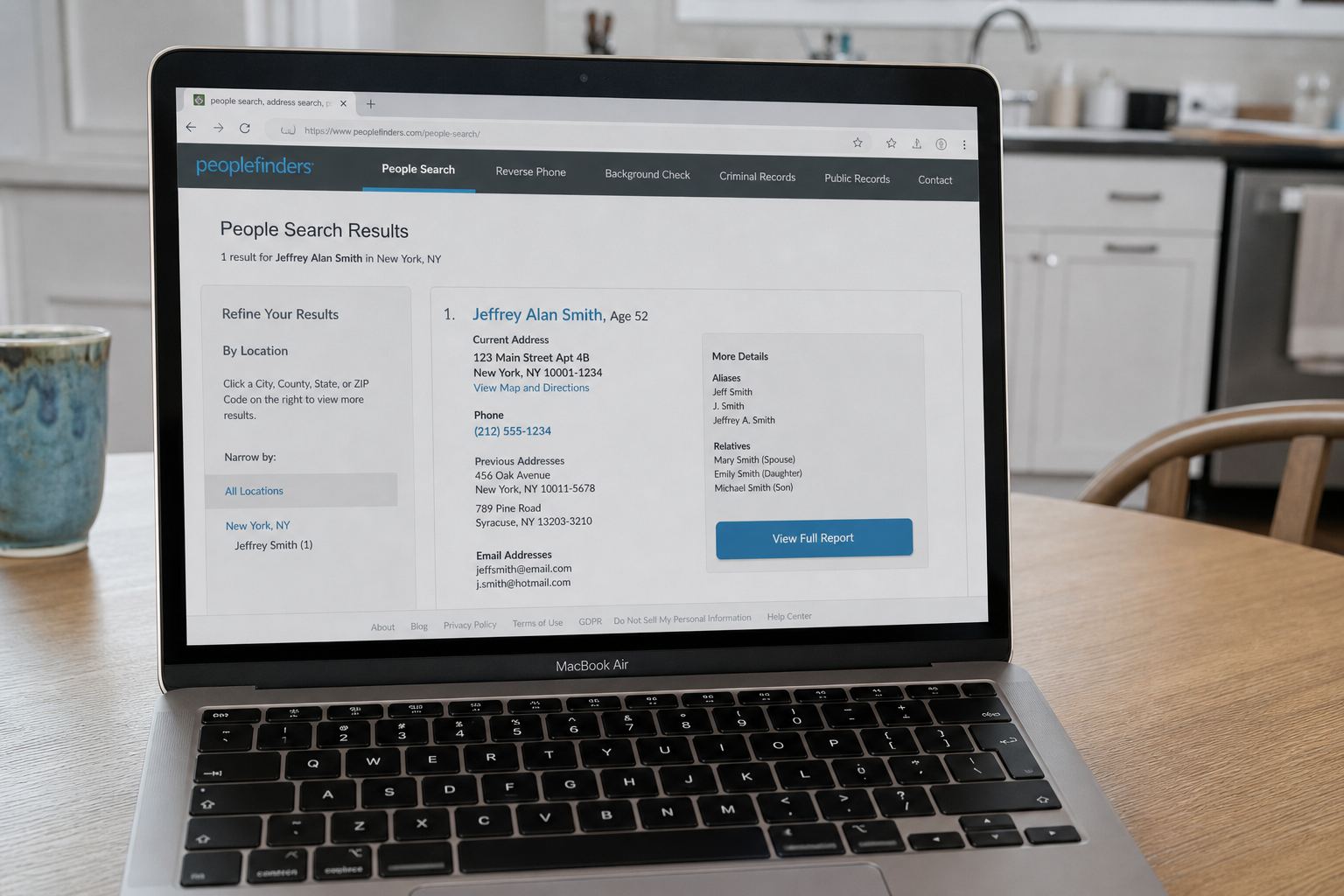
Most write-ups hand you a URL and a numbered list, then leave you staring at an error message with no idea why. The usual cause is the link itself. Reach your listing by clicking toward a paid report and the address you copy carries a "purchase" segment or a "&loaded=1" tail, which Spokeo's own opt-out form refuses. Grab a clean link and the rest goes quickly. The form is at spokeo.com/optout: paste the URL, type an email address, clear the reCAPTCHA, press Opt Out, then open the confirmation email and click the link inside.
That final click is where most people fail. The form returns a friendly "check your inbox" message and people read it as finished. It isn't finished. The confirmation link is widely reported to expire after about 72 hours, so if the email sat unopened for a week, just start over.
From search results to confirmation click
- Search your name at spokeo.com. Search your phone number and your email address too, because those pull up separate records.
- Don't click through toward a paid report. Right-click the listing in the results and copy the link address instead, since the purchase flow produces a messy URL the opt-out form rejects.
- Go to spokeo.com/optout, also reachable from the "Do Not Sell My Info" link at the bottom of any Spokeo page.
- Paste the URL, enter an email address, complete the reCAPTCHA, click Opt Out.
- Open the confirmation email. Multiple walkthroughs describe it arriving within minutes with the subject "Spokeo Directory Removal Confirmation" and a long unique link in the body. Click that link. A tab opens confirming the request was received, and that's the finish line.
Get the URL format right or the form bounces you
Spokeo's own help pages spell out which shapes the form accepts. A person listing looks like spokeo.com/John-Smith/State/City/1234567890, with a long numeric ID on the end. An email listing looks like spokeo.com/social/profile?q=name@example.com. Username listings use that same social profile format with the username after the q.
If your address bar contains the word "purchase" or a chunk reading "&loaded=1", the form will refuse it. Spokeo's stated fix is to rerun the identical search in a private or incognito window and grab the clean URL from those results. That one tip resolves most of the "it just says error" complaints you'll find on forums.
Which email address to use
Use one you can actually open, since the confirmation click is the entire process. Beyond that, a lot of privacy-minded people recommend an alias or a throwaway rather than your main address, on the reasonable theory that volunteering a live email to a data broker is a strange thing to do. Spokeo describes the address as verification only, and I couldn't confirm it gets used for anything else. If your mail provider supports plus-addressing or aliases, though, this is a sensible place to use one.
How many listings you'll have to remove
Probably more than one. Every Spokeo listing carries its own URL, and each needs its own trip through the form, its own confirmation email, its own click. There's no bulk option for consumers, and no way to say "everything with my name on it."
Search the variations before you decide you're done: maiden name, middle initial, the nickname version, every city you've lived in, old and current phone numbers, and any email address you've held for more than a few years. Three to six separate listings isn't unusual for somebody who has moved a couple of times and changed a surname once.
What Spokeo says it can't remove
Address listings are the notable gap. Spokeo treats a property as its own record with a tenancy history attached, and its help center states plainly that it can opt out an individual linked to an address but not the address record itself. The house page keeps existing. Your name comes off it, which is the part that matters to you.
Waiting for the listing to drop off
Spokeo's documentation points at roughly 24 to 48 hours after you confirm, and independent walkthroughs often report it happening far faster, sometimes inside an hour. Three days with no change is a reasonable point to start chasing.
Before chasing anything, clear your browser cache and cookies and run the search again, ideally in a private window. Spokeo's help center flags cached pages as a common reason a removed listing appears to still be sitting there, and it's easily the most common false alarm in this whole process.
If something goes wrong
Write to privacy@spokeo.com with the listing URL and the date you submitted. Spokeo also runs a customer care chat, though ad blockers tend to break the chat widget, so switch yours off for that page if the box never appears.
California residents have a separate route at spokeo.com/privacy/control for do-not-sell and deletion requests under state law. Phone numbers for privacy requests do appear in Spokeo's privacy policy, but those get changed periodically, so read the current policy rather than trusting a number copied off a blog post, this one included.
It'll come back eventually
Opting out suppresses the listing you pointed at. It doesn't stop Spokeo ingesting the next batch of public records with your name in them. Common experience puts relisting somewhere in the three to six month range, sooner if you move, remarry, register a vehicle, or file anything that becomes a public record.
Set a calendar reminder twice a year. Repeat the search, repeat the form. Ten minutes and free, which is more than can be said for the removal subscriptions that exist mostly because this process is tedious enough that people pay to skip it. Those services are legitimate and some are decent value if you have dozens of sites to cover. For two or three sites, do it yourself.
The California option that just kicked in
Californians have a genuinely better tool now. The state's Delete Act created DROP, the Delete Request and Opt-Out Platform, at databroker.drop.privacy.ca.gov, run by the California Privacy Protection Agency. You file one verified deletion request and it applies to every data broker registered with the state, several hundred of them, Spokeo included.
Consumers could start filing on January 1, 2026. Brokers were required to begin retrieving and processing those requests on August 1, 2026, checking the platform at least every 45 days and resolving requests within 90. That obligation is only days old as of this writing, so nobody yet knows how faithfully it's being honored. File the Spokeo form anyway. One route is fast and specific, the other is slow and broad, and there's no reason to pick.
Why bother at all
A Spokeo profile is a starter kit for anyone who wants to sound like they know you. Relatives' names, approximate ages, past addresses, associated phone numbers. That's the raw material for a call where a stranger uses a cloned voice and a real family name, which is precisely how the "it's me, I'm in trouble, don't tell mom" phone scam gets its credibility. Trimming your public listings raises the cost of that a little. Agreeing on a family safe word defeats it outright, so I'd honestly do that first and the opt-outs second.
Cheap public address data feeds other nuisances too, including the mystery packages that arrive with no sender and nobody's name on the invoice. Once you're done here, run the same removal at Whitepages, which verifies by automated phone call rather than email. Two sites won't make you invisible. They're simply the two that people check first.
Each listing costs nothing and takes about fifteen minutes. The suppression holds until Spokeo ingests the next batch of public records carrying your name. Permanent deletion from a people-search site is not a thing that exists.
Quick answers
- Paid removal?
- Look for the free form first.
- Family listed?
- Only with their okay.
This is general safety information, not legal advice. Scams change. If you need an official desk: FTC ReportFraud or IC3.