Texts and calls
How AI voice cloning scams actually work
Updated 6 September 2026
The technology to copy a voice used to need a studio and hours of clean audio. Now it needs a few seconds and a free tool. That shift is why "emergency" phone scams got so much sharper in 2026, and why a warning from the FBI in June 2026 pushed the same simple countermeasure everyone else landed on. Understanding how the scam is assembled makes it much easier to break.
The three pieces
A convincing voice scam needs three things to line up, and each one has a weak point.
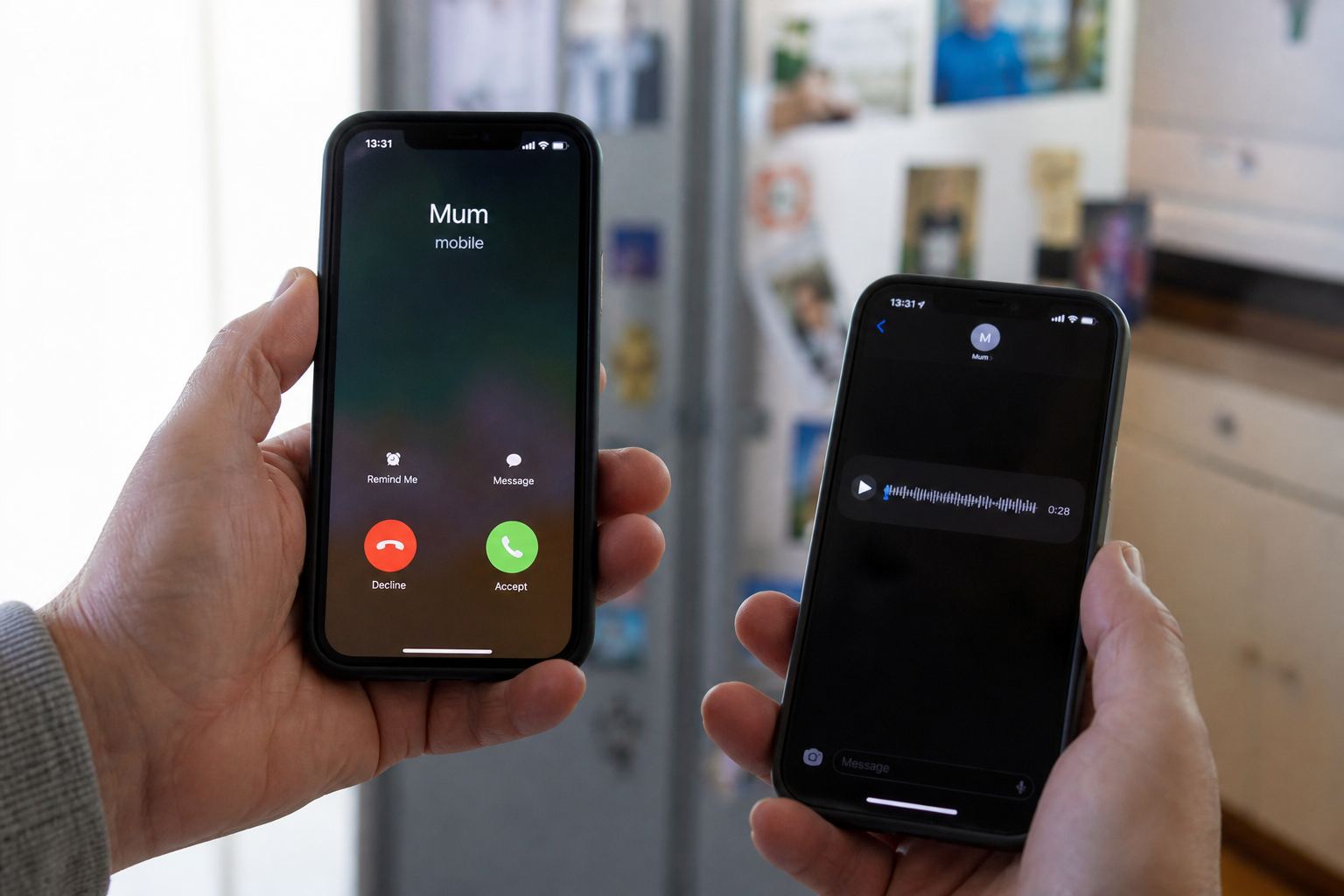
A voice sample. A clip of the person the caller will imitate. This comes from wherever that person's voice is public: a video posted to social media, a voicemail greeting, a podcast appearance, a TikTok. A few seconds is enough for current cloning tools. The uncomfortable truth is that most of us have posted more than a few seconds somewhere.
A target and a number. Someone who cares about the cloned person, and a phone number to reach them. This pairing (who is related to whom, and how to call them) is exactly what data brokers assemble and sell. A cloned voice is useless without knowing whose parent to call.
A pressure script. An accident, an arrest, a hospital, a lawyer. Always urgent, always needing money in an untraceable form, always discouraging you from hanging up or calling anyone. The urgency isn't decoration; it's the mechanism. It exists to stop you doing the one thing that ends the scam.
Why it works on smart people
Because it doesn't target your intelligence, it targets your reflexes. Hearing a loved one in distress triggers a response that runs ahead of analysis. By the time your rational brain would think to ask a verifying question, the emotional part has already decided this is real and time matters. That's not gullibility, it's how humans are built, and the scam is engineered around it. Which is why the defenses aren't about being cleverer in the moment. They're about having a rule already in place so you don't have to think clearly under pressure.
The three things that stop it
Hang up and call back. The single most reliable move. Whatever the story, end the call and phone the person on their known number. A real emergency survives a two-minute callback. A scam does not, because there's no one on the other end of the real number playing along.
A family safe word. A word only your family knows, asked for whenever a call involves money and urgency. The caller has the voice but not the word. Generate one and set it up here. This is the defense for the case where you genuinely can't reach the person to call back.
Shrink your exposure. The two ingredients you can influence are the voice sample and the broker listing. Locking down who can see your videos limits fresh voice samples. Removing yourself from data broker sites makes the who-to-call pairing harder to buy. Neither is a magic shield, but together they move you off the easy-target list, and scammers, like everyone else, prefer easy.
If you already sent money
Move fast on the payment method. Wire transfers can sometimes be recalled within a short window if you call the bank immediately. Gift card fraud is harder but worth reporting to the issuing store at once, since occasionally the funds haven't been drained yet. Report the whole thing at ic3.gov. And know that being fooled by this says nothing about you; it was built by people who do it full time, specifically to bypass clear thinking. The people who avoid it next time are mostly the ones who, like you now, know the pattern in advance.
If a suspicious message or code is your worry rather than a call, the QR checker and the brushing package guide cover that side of things.
Quick answers
- Can they copy a voice from TikTok?
- A few seconds of clear audio is often enough. Treat a panicked call as unverified until you reach the real person.
- Is a safe word overkill?
- It takes five minutes, and the caller has never heard it. That is the point.
This is general safety information, not legal advice. Scams change. If you need an official desk: FTC ReportFraud or IC3.