About us
How to remove yourself from TruePeopleSearch (and how fast it works)
Updated 6 September 2026
72 hours is the outside limit TruePeopleSearch puts on its own removals, and in practice profiles often disappear inside an hour. Getting there is free and starts on one page: go to truepeoplesearch.com/removal, enter an email address, tick the box confirming the record is yours, clear the hCaptcha, and click "Begin Removal." Then find your listing, click "Remove This Record" at the bottom of it, and click the link in the email they send you. Of the big people-search sites, this is the easiest one to get off.
From the removal page to the confirmation click
- Open truepeoplesearch.com/removal. You can also reach it from the "Do Not Sell My Personal Information" link in the footer of the homepage, though the direct URL saves a step.
- Enter an email address you can open right now, check the box saying you are the person in the record, and solve the hCaptcha. Then click "Begin Removal."
- Search your name with your city and state. Their address data can be stale, so if nothing matches, search the name alone and scan the results.
- Click "View Details" on the profile that's yours. Copy that URL somewhere. You'll want it if you have to follow up.
- Scroll to the very bottom of the profile page. The removal button sits under the relatives and past addresses, not at the top, and people miss it constantly. Click "Remove This Record."
- Open the confirmation email (subject line along the lines of completing your removal request) and click the link inside. The request does nothing until you do.
No phone call, no ID upload, no payment. If anything on the flow asks for a card number or a Social Security number, you're not on the real removal page.
The confirmation link expires
You've got roughly 24 hours to click it. Miss that window and the request quietly dies, and you'll need to start again from the removal page. Check spam before you assume the email never arrived, because it lands there routinely.
Five records per email address
TruePeopleSearch caps how many removals you can submit from one email, and the number reported by people who test this is five. That matters more than it sounds, because most adults have several listings on the site: one under a former address, one with a middle initial, one from a maiden name. Work through the obvious ones first. If you run out of allowance, use a second address for the rest.
How fast it really is
Faster than almost anything else in this category. Plenty of people see the profile vanish within an hour of clicking the confirmation link, and the site itself commits to 72 hours. Compare that with BeenVerified, which usually takes a day and sometimes three, and with the brokers that still want a mailed letter.
Wait the 72 hours, then search your name again to confirm. If the record's still up, resubmit rather than emailing. Resubmission is faster than support on this site, in my experience of watching how these forms behave.
Yes, it comes back
This is the part nobody wants to hear. Opting out suppresses the profile you claimed. It does not delete the county property records, court filings, voter rolls, or purchased marketing lists that the profile was built from, so when TruePeopleSearch ingests a fresh batch of those sources, a new profile can be assembled with a new record ID, and your old opt-out doesn't attach to it.
Reappearance isn't guaranteed and it isn't instant. Some people never see a second listing. Others find one within a year, usually after they've moved, registered a car, or bought a house. Search your name every six months and redo it if needed. The repeat takes about a minute once you know where the button is.
The lookalike domains are different sites
Removing yourself from truepeoplesearch.com does nothing for truepeoplesearch.net or truepeoplesearch.io. Those are separate operations riding on the name, each with its own removal process, and there are several more in the same shape. Search each domain individually if you find yourself listed. Annoying, and I don't have a shortcut for it.
For the record, truepeoplesearch.com is operated by Free Data Services, LLC, which is the name to search for in California's data broker registry at cppa.ca.gov/data_broker_registry if you want their filed contact details.
Google may still show the old page
A removed profile can linger in search results for a while because Google and Bing cached it. Two fixes. Google's "Results about you" tool inside your Google account will submit a removal request for pages showing your address, phone, or email. Bing has its own content removal form. Both can take anywhere from a few days to a few weeks, and neither is worth doing until the underlying page is genuinely gone.
California residents can do this in one request
If you're in California, there's a route that covers every registered broker at once instead of one form at a time. The state's Delete Request and Opt-Out Platform, DROP, has been open to consumers since 1 January 2026 at consumer.drop.privacy.ca.gov, and one submission reaches more than 600 registered data brokers.
Data brokers were required to begin retrieving and processing those requests on 1 August 2026, which was days ago. From now on they must check the platform at least once every 45 days and finish deletions within 90 days, with a $200 per request per day penalty for ignoring them. If you enrolled in January and nothing changed all spring, that was the design, not a failure. You verify residency through the California Identity Gateway or Login.gov, it's free, and the agency states your details aren't retained by the platform.
Outside California, no equivalent single-request system exists that I could verify. Some states give you deletion rights you can exercise individually, but the mechanics vary a lot, so the manual removal above is still the reliable move.
What removal actually buys you
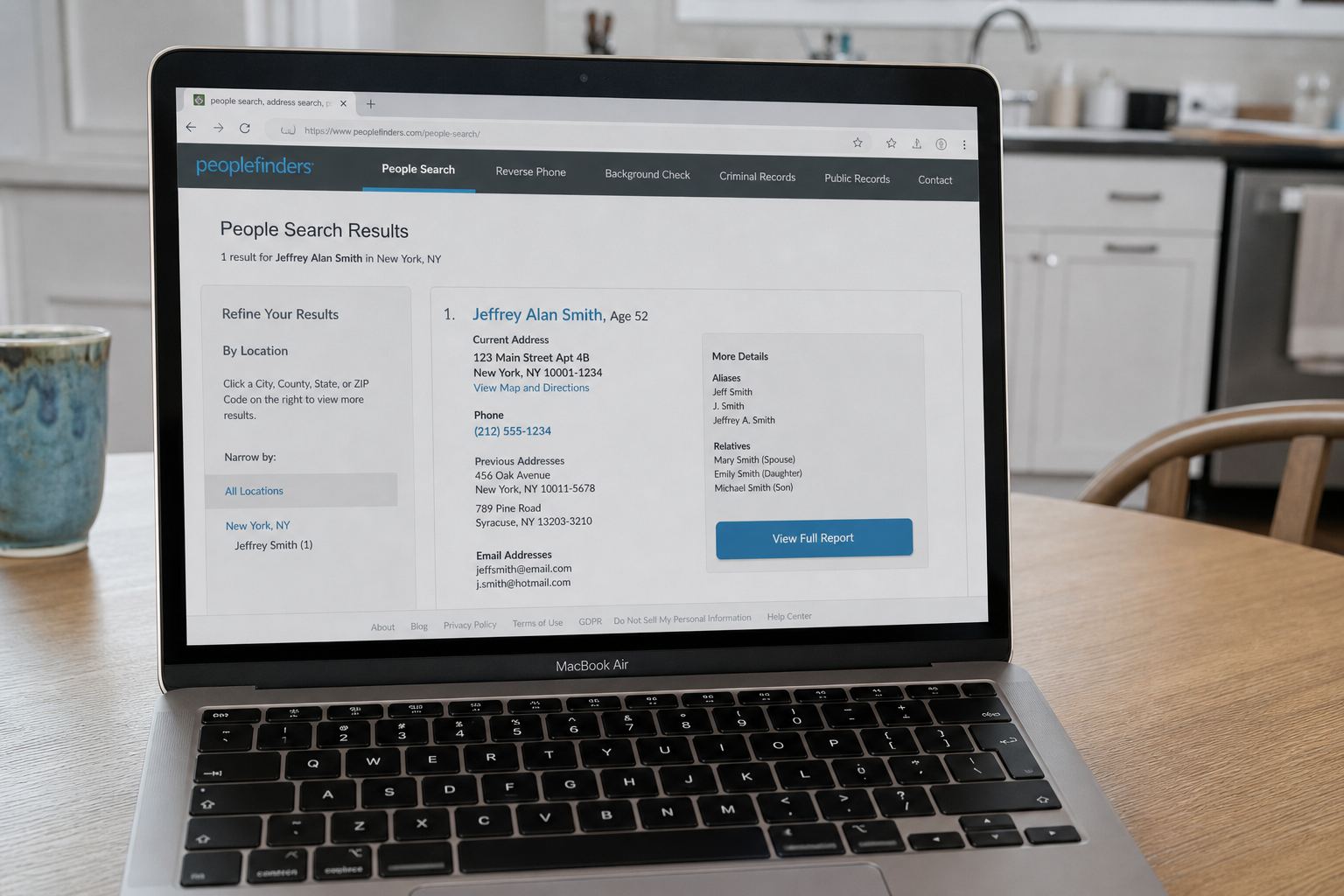
A TruePeopleSearch profile hands over your age, current and previous addresses, associated phone numbers including old landlines, and a list of relatives. That last field is the valuable one to a criminal. It's how a stranger works out that you have a grandmother in another state, then builds a voice clone from a short clip of you and calls her at 2am asking for bail money.
Getting the listing down makes that homework harder. It doesn't make it impossible, since the same details are scattered across dozens of similar sites and inside data breaches you'll never inventory. So do the removal, but also set up a family safe word that any caller claiming to be a relative in trouble has to say before anyone sends a dollar. That one holds even when the data is out there.
Random packages you never ordered, arriving with your name on them, are evidence that your name and address are actively circulating in commercial lists. That's a brushing operation. So here's the rule to carry out of all this: an unexplained delivery is information about you, never a gift.
Quick answers
- Why so much family?
- Household matching. Opt them out only if they asked.
- Gone for good?
- Often not.
This is general safety information, not legal advice. Scams change. If you need an official desk: FTC ReportFraud or IC3.