About us
How to remove yourself from BeenVerified for free
Updated 6 September 2026
Two BeenVerified search boxes look nearly identical and do opposite jobs. The one on the homepage walks you toward buying a report on somebody. The one at beenverified.com/app/optout/search (the older address, beenverified.com/svc/optout/search/optouts, still lands in the same form) takes a report down instead, for free, usually within 24 hours, with no account and no payment involved. Start on the second one. You search for your own record, claim it, then click a link in a confirmation email. Five minutes, maybe ten if your name is common.
Finding your record and claiming it
- Open the opt-out search page directly. Don't start from the normal BeenVerified search box, because that route steers you toward buying a report instead of removing one. If you'd rather not type a URL, scroll to the bottom of any page on the site and click the footer link labeled "Do Not Sell or Share My Personal Information."
- Enter your first name, last name, and state. That's all it asks at this stage.
- Find the record that's actually you. Age and the list of relatives are the fastest way to tell yours apart from a stranger who shares your name.
- Click the button next to that record. It's labeled "Proceed to Opt Out."
- Type an email address and clear the CAPTCHA. Use an inbox you can check right now.
- Open the email and click the confirmation link. Nothing at all happens until you do this, and the message lands in spam often enough that you should look there before deciding it never arrived.
You should never be asked for a Social Security number, a card, or a photo of your ID to take down a free listing. If a page asks for any of that, you're not on the real opt-out form. Close the tab and start over from the URL above.
When the record actually disappears
BeenVerified points at 24 hours after email verification. The privacy outfits that re-test this every year report anywhere from a few hours to about 72. I'd give it three days before deciding something broke.
Then search your name on the site again. If the record is still sitting there, write to the privacy address listed on BeenVerified's contact page and paste in the URL of the record. Worth knowing: canceling a paid BeenVerified membership is a completely separate process from opting out, and doing one does nothing for the other.
When there's more than one of you
The site frequently holds several records for a single person. An old address in one. A maiden name in another. A middle initial in a third. Each of those is its own listing with its own opt-out, so work through the search results patiently and repeat the flow for every record that belongs to you.
If duplicates keep surfacing after you've claimed them, that's the moment to email their privacy team with the list of URLs rather than clicking through the form a seventh time.
Two things that go wrong
The confirmation email doesn't show up. Usually that's a typo in the address or an overzealous spam filter. Just run the search again and resubmit with a different inbox.
Or the listing reappears within days, which almost always means there was a second near-duplicate record you didn't spot, not that BeenVerified reversed your request. Search again with your middle initial, and with any former last name.
The other sites the same company runs
BeenVerified belongs to The Lifetime Value Company, a New York firm that also operates PeopleLooker, NeighborWho, Ownerly, PeopleSmart, NumberGuru, ReversePhone, Bumper, and MoneyBot5000. Same parent, broadly the same data, nine separate websites.
Opting out of BeenVerified does not reliably clear you from the others. I've seen the claim made both ways and couldn't confirm that one request propagates across the whole family, so treat them as separate chores. PeopleLooker and NeighborWho are the two people most often find themselves on.
One correction, because it confuses nearly everyone: this company has no connection to PeopleConnect, which owns TruthFinder, Intelius, and Instant Checkmate. Different corporate family, different forms, near-identical looking results pages.
California residents have a much shorter path
If you live in California you can skip the site-by-site grind. The state's Delete Request and Opt-Out Platform, DROP, opened to consumers on 1 January 2026 at consumer.drop.privacy.ca.gov, and a single submission goes to every data broker registered with the state, more than 600 of them.
The date that matters just passed. Brokers were required to start pulling and processing DROP requests on 1 August 2026, and from here they must check the platform at least once every 45 days, with deletions finished inside 90 days. The penalty is $200 per request per day. So if you signed up back in January and nothing appeared to happen for seven months, that's expected behavior, not a broken system. Last week was the starting gun.
You prove California residency through the California Identity Gateway or through Login.gov. It costs nothing, and the agency says the details you enter aren't retained by the platform. If you're outside California, DROP won't take your request and the manual opt-out is still the job. Everyone can still use the state's data broker registry at cppa.ca.gov/data_broker_registry as a lookup tool, since registrants have to file contact details and a description of what they collect.
Why a scam site cares about a people-search listing
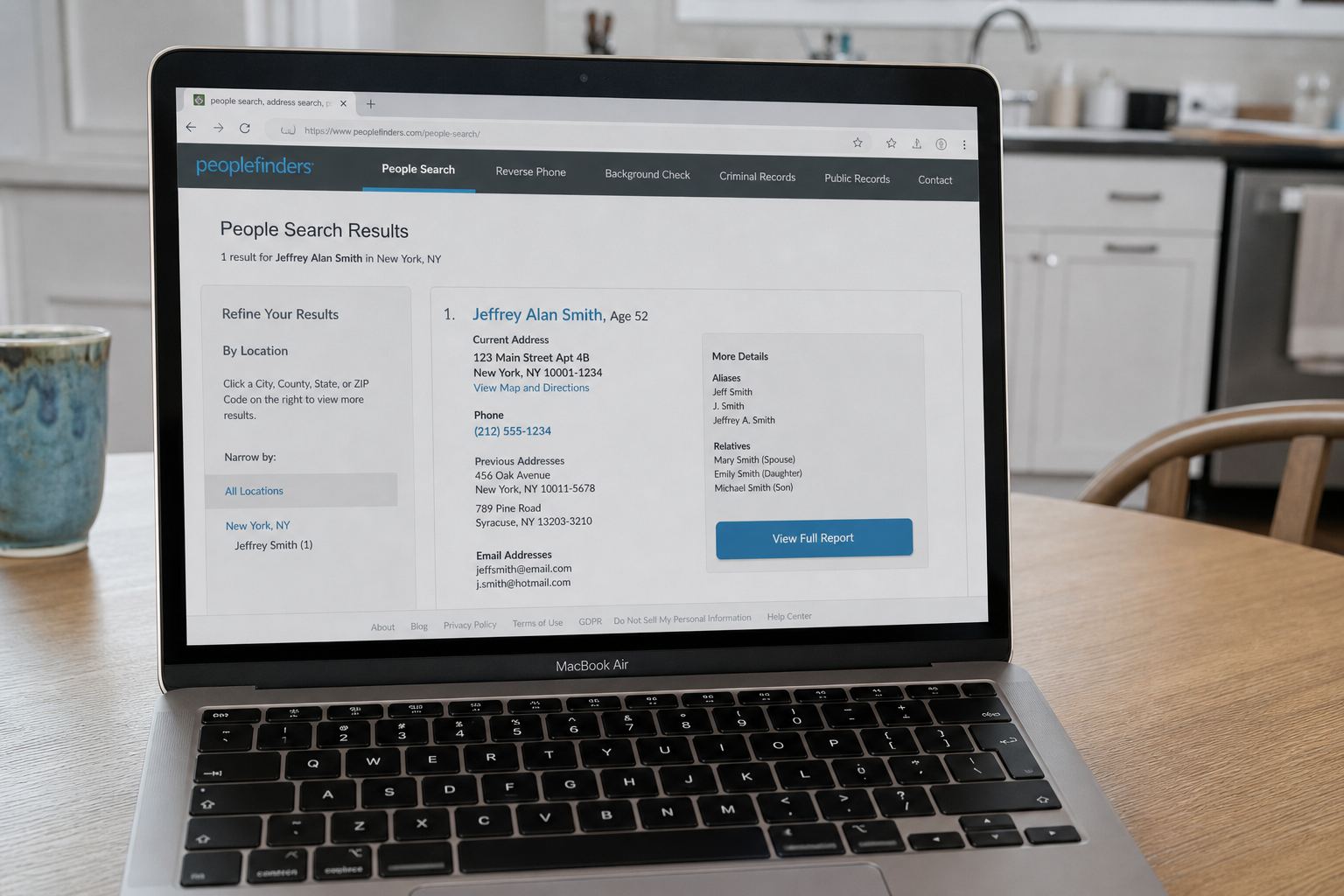
A BeenVerified profile is a tidy briefing document on you: age, current and previous addresses, phone numbers, and, most usefully to a criminal, relatives listed by name with approximate ages. That's the raw material behind the "grandma, I'm in trouble, don't tell mom" call. Someone reads the profile, works out who is related to whom, then clones a voice from a few seconds of audio and rings the relative most likely to panic and pay.
Taking the listing down raises the cost of that a little. It doesn't erase the county deed, the voter file, or the marketing database underneath, and the same facts sit on dozens of other sites, so I won't pretend removal is a shield. Pair it with a defense that survives the data leaking anyway: agree on a family safe word that any caller has to produce before money moves. That one works no matter how thoroughly you're indexed.
Next on the list, do TruePeopleSearch, which is quicker to clear and exposes more of your phone history than BeenVerified does.
Plan on redoing it
An opt-out suppresses a profile. It doesn't delete the public records the profile was assembled from, so when those sources refresh, a new listing can be built from scratch, and it won't inherit your old request. That isn't BeenVerified being sneaky. It's just how the pipeline works.
Set a reminder for six months out and search your name again. Two minutes. If something fresh has appeared, repeat the flow, which by then takes about ninety seconds.
Don't buy a removal service in a moment of alarm. The subscription outfits earn their money if you want a hundred brokers handled on repeat forever, but every step described here is free, and nobody needs your card details to take down your own record. If you'd rather keep going under your own steam, Whitepages is the sensible one to clear next, partly because it's what a stranger tends to hit first when they search your name, and partly because it verifies you with an automated phone call instead of an email, which catches people out.
Quick answers
- Is this a virus?
- No. It is how they got the phone number that later carries the scam text.
- Once and done?
- Usually not. Recheck in a few months.
This is general safety information, not legal advice. Scams change. If you need an official desk: FTC ReportFraud or IC3.