Packages
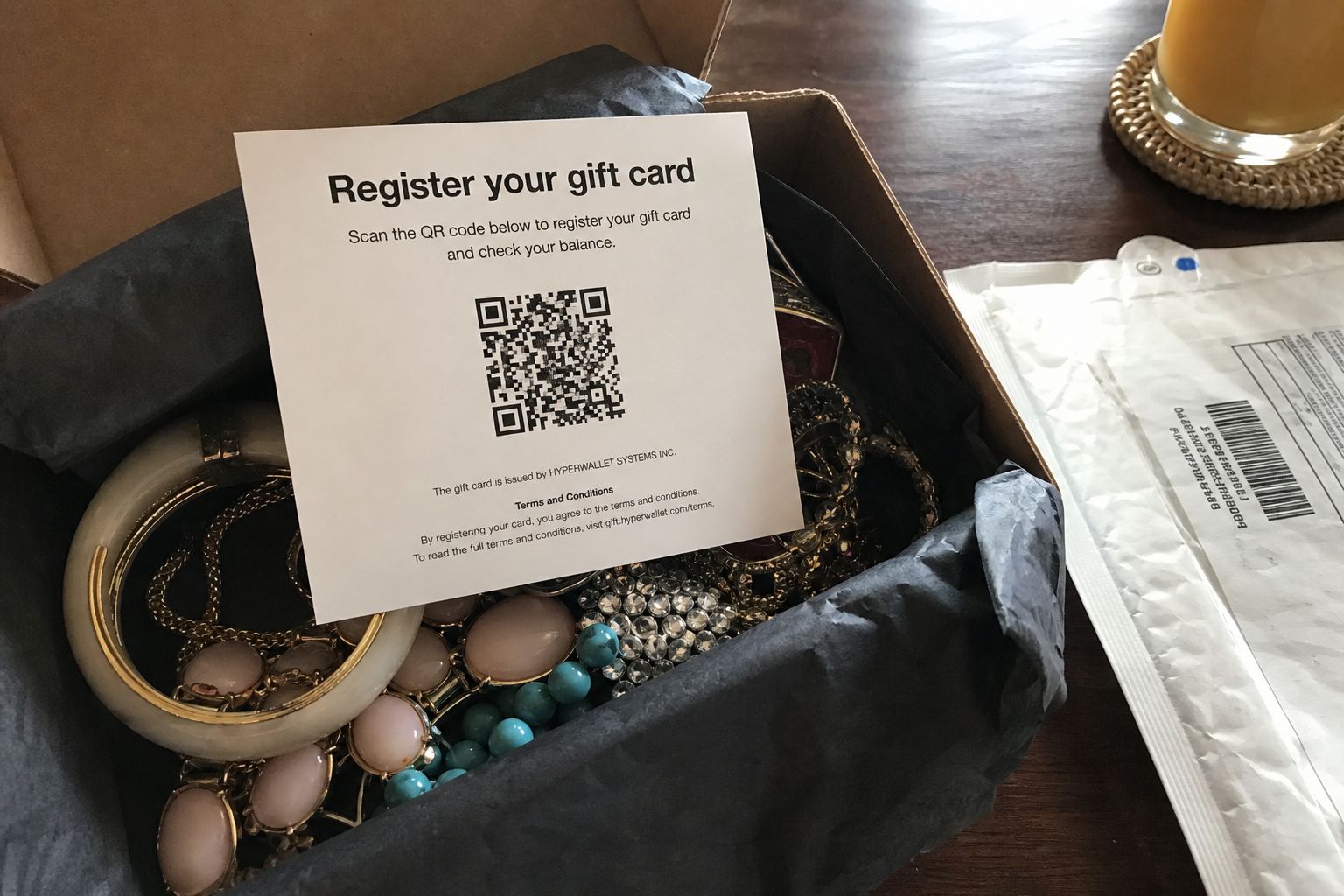
The "register your gift card" insert in a package you didn't order
Updated 6 September 2026
$1.95 at the low end, $9.99 at the high end, and the figure changes constantly. That's the range of activation fees reported on these inserts, and not a cent of it is the point. There's no balance to activate and no card to register. What the insert wants is two specific things, a live card number and the billing address attached to it, and the fee is only the excuse to make you type them in.
- 1No issuer, card network logo, or customer service number printed anywhere
- 2Billing address asked 'for verification' though nothing is being shipped
- 3Fee called a 'refundable verification fee', never actually refunded
- 448-hour countdown pressures a fast scan before you think it through
These inserts turn up in boxes nobody ordered. If a package arrived with your name on it and no explanation, the delivery came first and the insert is the follow up, which I've explained separately in the piece on why unordered packages arrive.
The gift, the fee, and the 48 hour clock
Wording moves around, but the structure holds: a gift you've supposedly earned, a step to claim it, a small charge, a clock. Lines reported on real inserts include:
- "Register your gift card to activate your balance"
- "A one time activation fee of $1.95 applies"
- "Refundable verification fee, returned within 24 hours"
- "Pay shipping and handling only"
- "Scan to redeem. This offer expires in 48 hours."
Look at what isn't printed. No issuer, no card network logo, no cardholder agreement in tiny type, no customer service number, no expiry date. A genuine prepaid or retail gift card carries all of that because it's a regulated financial product. What you're holding is printed cardboard.
Each field on the form, and why it's there
The form looks generic. It isn't. Every box has a resale value, and they're ordered so the harmless looking ones come first and build momentum.
- Name and shipping address. Already known, since they mailed you a box. Asking anyway does two jobs: it makes the form feel administrative, and it confirms the address is occupied by somebody who reads their mail.
- Email and mobile number. Sold on, and used directly. A phone number tied to a confirmed home address is worth more to a text scammer than a random number is.
- Date of birth and last four of your Social Security number. No gift card has ever needed either. That's identity file material, the stuff used to answer verification questions at banks and phone carriers.
- Card number, expiry, CVV. The obvious one, and on its own the least valuable piece of the set.
- Billing address and ZIP code. The real prize, handed over without thought because it reads like paperwork.
Why the billing address is the valuable part
Most US online checkouts run an Address Verification Service check. The processor compares the numeric part of the street address and the ZIP you typed against what the card issuer has on file, then returns a match or a mismatch. A stolen card number with no matching address gets declined or flagged at plenty of merchants. The same number with the correct billing ZIP goes straight through, and it sells for considerably more.
So the fee page isn't really collecting sixteen digits. It's collecting a matched set. That's why the form insists on a billing address "for verification" when nothing is being shipped to it.
The small charge is a test, not a price
Fraud teams call this card testing. Before a stolen card gets used for anything worth stealing, someone runs a tiny transaction through it, typically under five dollars and often under one, purely to see whether it authorizes. An approval proves the card is live, unblocked and correctly matched. Cards that pass get resold at a markup or spent fast on gift cards and easily resold goods.
Which is exactly why the amount is small. It's engineered to be the charge you can't be bothered to dispute.
Or it's a subscription, which hurts slower
The other outcome is recurring billing. The FTC has been filing cases on this pattern all year. In its January 2026 complaint against JustAnswer, the agency alleged people believed they were paying a one time join fee of one to five dollars and were instead enrolled in monthly plans costing between $28 and $125. A June 2026 FTC action described the same playbook running across a group of subscription apps. The older version of the trick was a free gift where you paid shipping only, and then the card kept getting billed.
Here's the uncomfortable bit. From the descriptor on your statement you often can't tell whether a $2.95 charge was a card test or the first month of something. Treat both the same and replace the card.
If you already filled it in
Deal with the card first, because that's the piece with real deadlines attached.
- Call the number on the back of your card and ask for a new number, not just a fraud flag. A card typed into a phishing form is compromised whether or not a charge has shown up. Replacement is free and takes a few days.
- Credit card: under the Fair Credit Billing Act your liability for unauthorized use is capped at $50, and most issuers waive even that. Billing error disputes should go in writing within 60 days of the statement showing the charge.
- Debit card: Regulation E is harsher and the clock genuinely matters. Report within two business days and your exposure caps at $50. Between two and 60 days it rises to $500. After 60 days from the statement, there may be no cap at all. Banks generally get 10 business days to investigate, extendable to 45 if they issue provisional credit.
- Read the last two statements line by line, including anything under a dollar. The probe charge is your early warning.
If what you typed was a password rather than card details, the priority order changes, and it's set out on the page about what to do after you scanned a scam QR code.
If you gave a date of birth or Social Security digits
File at IdentityTheft.gov, which is the FTC's own site. It produces an Identity Theft Report plus a recovery plan with the steps in order, and that's more useful than it sounds when you're rattled. After that, freeze your credit at all three bureaus: Equifax, Experian and TransUnion. Freezes are free under federal law, they last until you lift them, and online or phone requests must be processed within one business day (three business days by mail).
A freeze blocks new accounts opened in your name. It doesn't touch your existing cards, your score, or your ability to keep using them.
Reporting it, and what that's worth
Report the package and the insert to the marketplace it claims to come from, to the FTC at ReportFraud.ftc.gov, to the Postal Inspection Service at uspis.gov/report or 1-877-876-2455, and, if a QR code was involved, to the FBI at ic3.gov. Photograph the insert and the shipping label before anything goes in the bin. Nobody will call you back, and the reports still do something, since that's how inspectors spot a run of shipments from one seller account.
Whether your version is the plainer card described under the card inside the package or the curiosity hook covered on scan to see who sent this gift, the answer is identical. Keep the merchandise. Ignore the fee. Don't fill in the form. And an opinion, flagged as an opinion rather than a finding: I doubt there's a single operation behind any of this. There's no evidence pointing that way, the templates differ too much, the amounts wander, and it reads to me like several groups copying a trick that works, which is why I wouldn't treat the fee printed on your insert as a fingerprint.
Quick answers
- There is a dollar amount printed.
- Anyone can print a number.
- I already registered.
- Change that password and watch the card.
This is general safety information, not legal advice. Scams change. If you need an official desk: FTC ReportFraud or IC3.