Packages
Unsolicited seed packets: the one mystery package you should report
Updated 6 September 2026
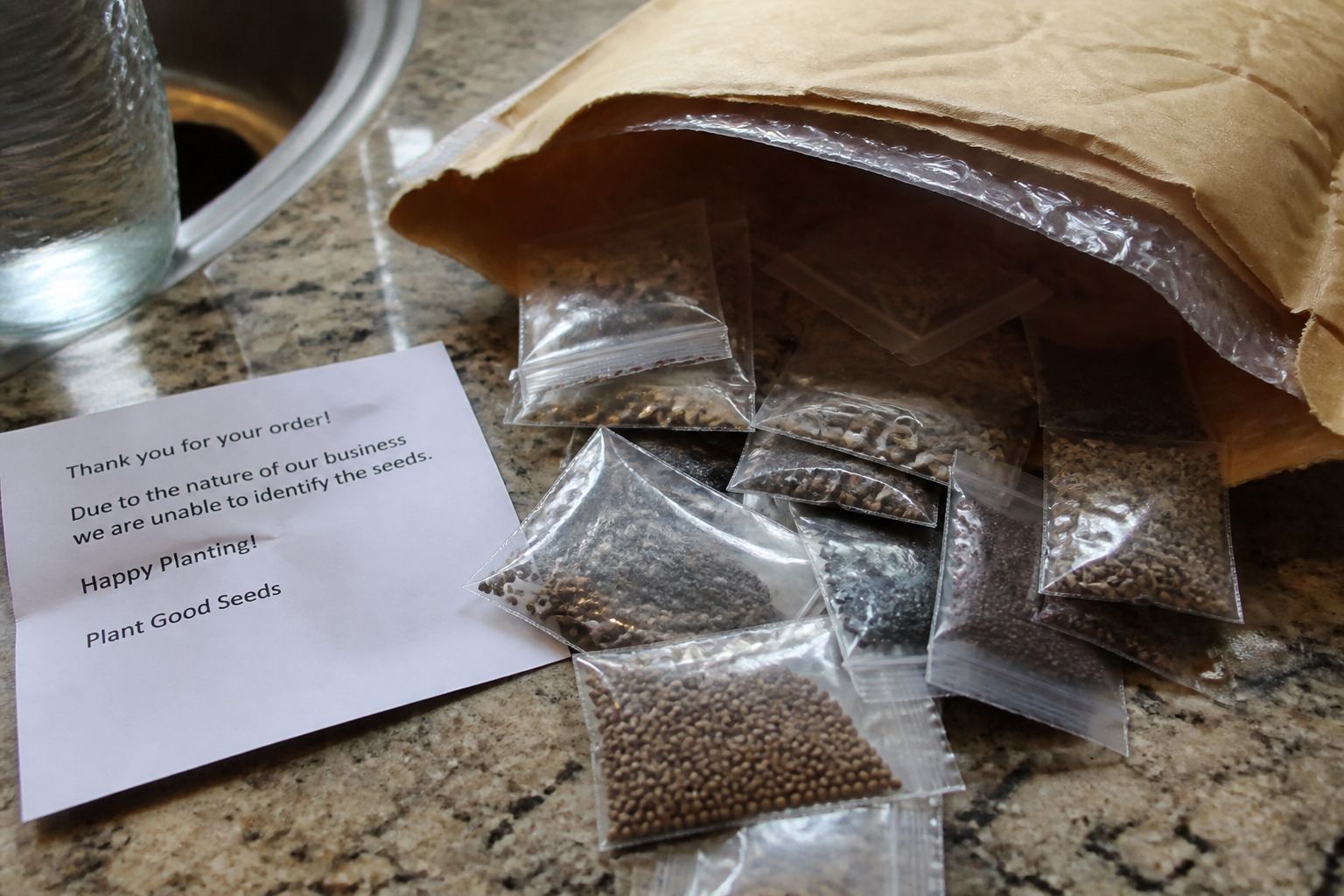
Coverage of these packets nearly always stops at don't plant them, which leaves out the half that actually trips people up: don't throw them away either. Household trash isn't a sealed system, and viable seed in a landfill is viable seed somewhere it wasn't before. So keep the packet closed, don't open the inner envelope to photograph what's inside, hang on to the mailing label, and contact your state department of agriculture or your USDA APHIS State Plant Health Director before you decide anything. Almost every other unordered package is just a nuisance. Seeds are a biosecurity problem, and the one mystery delivery genuinely worth reporting to a federal agency.
Why seeds get treated differently
A free phone charger you never bought is annoying. A packet of unlabeled seed is a live agricultural import that skipped inspection. Seed entering the United States is regulated under the Plant Protection Act, which means it's meant to be declared, inspected, and in many cases accompanied by a phytosanitary certificate from the exporting country. A padded envelope dropped into the international mail stream with "jewelry" written on the customs form did none of that.
The worry isn't really the plant you'd get if you sowed them. It's what rides along. Unidentified seed can carry weed species that are legally noxious in your state, insect eggs, fungal spores, and bacterial or viral plant pathogens that no American crop has been bred to resist. USDA's Animal and Plant Health Inspection Service, normally shortened to APHIS, would much rather test a thousand harmless mint seeds than miss the one carrying something that takes decades and a lot of money to eradicate.
Who to call about a seed packet
There's no single national hotline everyone uses, which is genuinely confusing. These are the routes that work.
- Your state department of agriculture is usually fastest. Texas runs collections through 1-800-TELL-TDA (1-800-835-5832). West Virginia asks residents to call (304) 558-3200. Your state's number sits on its agriculture department site, normally under plant industry or plant protection.
- Your APHIS State Plant Health Director handles the federal side, and the directory is at aphis.usda.gov/contact/plant-health.
- The National Plant Board keeps a directory of state plant regulatory officials at nationalplantboard.org/membership, useful when your state website is a maze.
- APHIS Smuggling Interdiction and Trade Compliance takes reports of illegal agricultural imports on 800-877-3835 or at SITC.Mail@aphis.usda.gov, and says submissions are kept anonymous.
Several state extension services publish a named USDA contact for their state. Penn State Extension does. Individual names change as staff move, so treat an extension page as a starting point rather than gospel.
What your state or APHIS will ask for
Photographs first, physical packet later. Send clear photos of the unopened seed packet, the outer envelope, and the mailing label with the tracking number readable. Include the date it arrived, the carrier, and pictures of anything else in there: an invoice, an insert card, foreign-language labeling.
Then wait for instructions. Depending on your state, someone will arrange a no-contact pickup, give you a drop-off point, or ask you to mail it to a designated address. Some states will simply tell you to destroy it once they've seen the photos. That's a legitimate answer, not a brush-off, because they can identify a great deal from a good picture.
How to store it while you wait
Seal the whole thing, packet and packaging together, inside a zip-top bag. Penn State Extension suggests putting that bag in the freezer until someone contacts you, which stops anything alive inside from becoming a problem in your kitchen. Don't open the seed packet to photograph the seeds. Shoot through the plastic.
Why "just bin it" is the wrong instinct
Household trash isn't a sealed system. Bags split, transfer stations spill, and viable seed in a landfill is viable seed somewhere it wasn't before. Burning is worse, being uncontrolled, and plenty of pathogens survive it.
Once APHIS or your state clears you to destroy the packet, the approved method is unglamorous and very specific. Leave the packet closed. Wrap and completely enclose it in duct tape, then double-bag it in zip-top bags before it goes in the trash. If seeds already went into the ground, remove the plants along with roughly three inches of surrounding soil, double-bag that too, and put it in household trash. Never compost any of it.
What has actually been in these packets
The 2020 wave is the only one counted properly in public. APHIS collected 19,271 packages nationwide as of January 7, 2021, had examined 9,055 of them, and identified 488 different species. Around 57 percent were fruits, vegetables, or herbs. Roughly a third were ornamentals. About 7.5 percent were classed as weeds, and a couple of percent couldn't be identified at all. Early identifications included rosemary, sage, mint, and hibiscus.
So most of it is exactly what it looks like: cheap bulk seed used as shipping filler. That's the boring truth. The weed fraction is the part that justifies the entire apparatus.
How worried you should be, honestly
Less worried than the headlines suggest. I couldn't find a single confirmed pest or disease outbreak in the United States traced back to these mailings, and coverage of the 2025 and 2026 waves says the same. Officials keep making the point that prevention costs far less than eradication after something establishes itself, which is the real argument. Nobody is claiming your tomato patch is about to take down American agriculture.
The volume is real, though. Texas collected 126 packets in the first fifteen days of 2026, and its agriculture commissioner said the packages were arriving faster and further than ever before. Alabama, Colorado, Kansas, New Mexico, Ohio, Pennsylvania, and West Virginia have all issued advisories during the current run.
Where your address came from
Almost certainly a data broker file or a scraped list, not a hacked account. Seeds turn up in the mail for the same reason cheap earbuds do: they're the lightest thing a seller can ship with a real tracking number in order to fake a verified purchase. That's the mechanism behind unordered packages in general, and it explains why the 2020 shipments carried customs declarations reading jewelry or toys. If costume jewelry rather than seed is what showed up at your door, the rings and pendants version runs on identical logic.
Nobody has publicly proven the seed mailings are only brushing. APHIS leaned that way in 2020, the FTC has described them in those terms since, and no better explanation has surfaced. I'd treat it as the most likely story rather than a closed case.
If there's a QR code in the envelope
Some of these envelopes include a card asking you to scan a code to claim a gift, register a product, or leave a review for a reward. Don't. If you want to know where it points without touching it, you can decode the code from a photo instead. And if you already scanned it and typed something in, the cleanup steps take about twenty minutes and are worth doing today rather than Saturday.
If you already planted them
Call your state agriculture department today and tell them what went in the ground and roughly when. Hundreds of people planted the 2020 seeds and the sky did not fall, so this isn't a confession, it's a location. A reported planting is a site somebody can go and check. An unreported one isn't. Make that call before you pull anything up.
Quick answers
- Can I just throw them away?
- Follow the current APHIS advice. Do not plant them.
- Are they poisonous?
- The bigger issue is invasive plants and the card, not a movie toxin.
This is general safety information, not legal advice. Scams change. If you need an official desk: FTC ReportFraud or IC3.