
Texts and calls
The Cash App flagged deposit screenshot, taken apart
Updated 6 October 2026
You get a message from someone who insists you just received their money, and the assumption that a real transfer must come with a real paper trail is what is about to cost you. The screenshot is the con, and every word after it is the recovery room.
What the message actually says
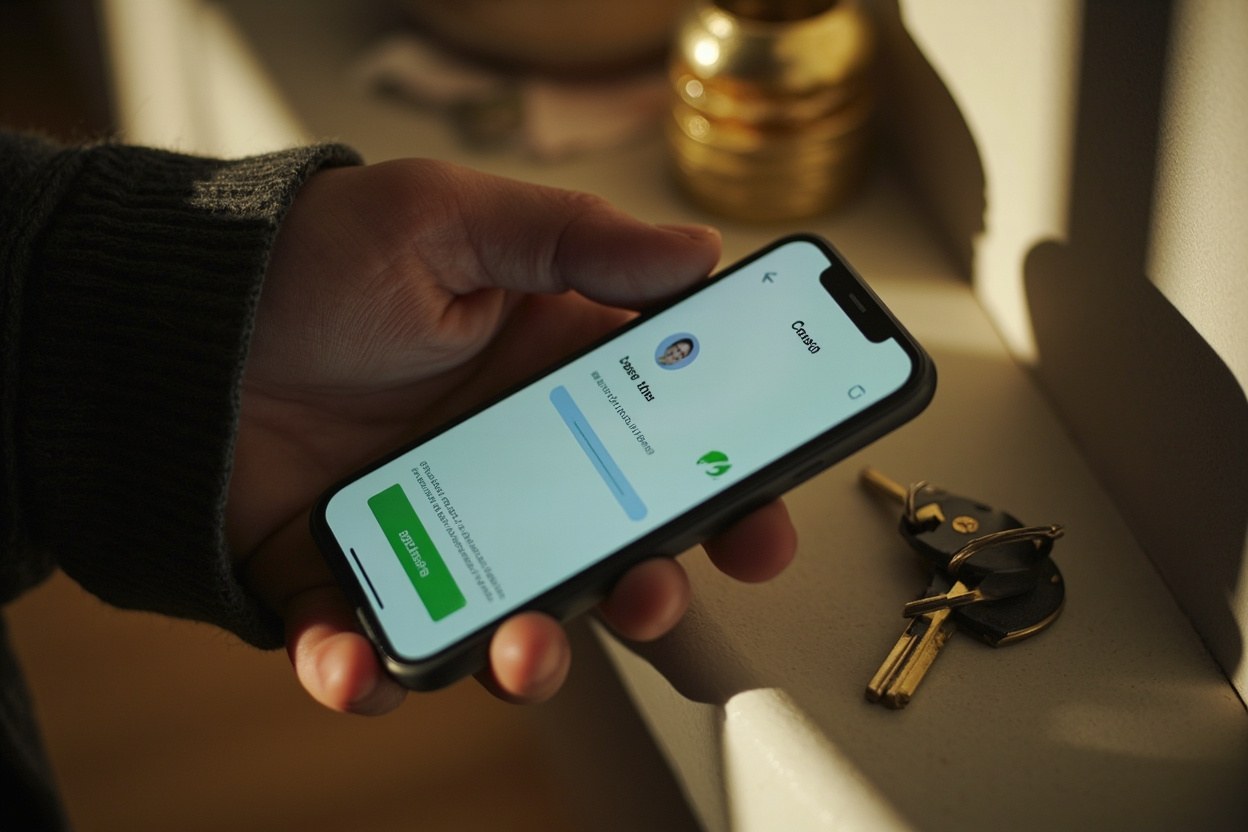
The text or DM usually lands out of nowhere. A stranger tells you a Cash App payment of two hundred to four hundred dollars was sent to you by accident, or that a payment to a small business you actually use is "flagged for review" and will bounce back unless you act. They send a screenshot that looks like the Cash App interface: green confirm bar, the dollar amount, your $Cashtag, sometimes a reference number, occasionally a fake Cash App support banner with a phone number attached.
That is the whole setup. The payment is not real, the flag is not real, the support number is not Cash App, and the only part of the picture that exists in the real world is the case it is trying to talk you into. The point of the screenshot is to make the next step feel procedural rather than suspicious, so that when they ask you to refund, forward, or verify, you do it the way you would fix a misdelivered parcel.
The tell, line by line
Three signals give it away every time. First, real Cash App notifications are push notifications inside the app, not screenshots handed to you in iMessage, WhatsApp, or Instagram DMs. Second, a flagged or held payment does not require the recipient to call a number, click a link, or send money to release it. Third, Cash App does not operate a phone support line for the public; its support is in-app or at support.cashapp.com, full stop.
You will also notice the dollar amount sits in a narrow range. It is high enough that a busy person does not want to keep someone else's money, and low enough that you might call it even rather than report it. Scammers call this a decoy refund trap and the FTC has been warning about variants of it since at least 2023. The emotional pressure is the point, not the math.
How the flip works after the screenshot
Once you reply, the script forks. In the cleanest version, the stranger asks you to send the same amount back to a different $Cashtag because, they say, the original will reverse automatically and you will be out twice. You send it, the stranger vanishes, and the original "deposit" was never real, so you are simply down the amount you returned.
In the longer version, they push you off platform. The screenshot contains a 1-800 number that answers with a friendly "Cash App Security." A real-sounding agent walks you through verifying your account, which means reading out a one-time code that just landed in your texts. That code is the password reset, the instant transfer, or the new linked card. The money leaves your account in a single transfer, usually before you have put the phone down. The person on the line is a good actor, trained, patient, and wrong about every single thing they just told you.
Why the screenshot is so convincing
Cash App's UI is widely screenshotted, so a faked image is easy to assemble. Scam kits with editable PSD templates have circulated on Telegram since 2024, and generative AI has pushed the quality up again this year. A green confirm bar, a name, an amount, and a time stamp are all a thirty-second job. If the stranger includes a second image of a "live chat" with Cash App support, that is also a fake, and the live chat bubble is a sticker from a template, not a screen capture from a session you can return to.
The other reason the screenshot lands is that the rest of the message is socially precise. It opens with a small apology, references a recent purchase you probably did make, and asks a yes-or-no question. That structure is borrowed straight from legitimate vendor communication, which is why it survives a quick once-over from a careful person.
What Cash App actually does with a flagged payment
Real holds on Cash App happen in two situations. If a payment is sent to an account that does not exist or is closed, the sender sees a fail state in their own activity tab, not a banner addressed to the recipient. If a payment is held for risk review, the recipient sees a pending state in the activity tab inside the app, with the money visible but not withdrawable until the review clears. In neither case does Cash App text the recipient, ask the recipient to call, or push the recipient to act inside a window of minutes.
If you genuinely received a payment from someone you do not know, do not spend it, do not send it back, and do not contact the sender. Open the app, look at the activity tab, and let Cash App's own systems deal with it. Under Cash App's user agreement, the company claws back unauthorised and fraudulent payments, and you cooperating with the fraudster does not protect you from that clawback later.
The law, and what counts as a crime
In the United States, this is wire fraud under 18 U.S.C. § 1343, and in the United Kingdom the closest offence is fraud by false representation under the Fraud Act 2006. Both are police-reportable. The 1-800 "support" script, where the victim is walked through handing over a one-time code, is also identity fraud and unauthorised access, and the resulting bank transfers can be charged as money laundering depending on the mule chain.
Reporting it correctly matters. The FBI's Internet Crime Complaint Center (IC3) takes complaints at ic3.gov, the FTC at reportfraud.ftc.gov, and Action Fraud in the UK at actionfraud.police.uk. If the money left your account through your bank rather than Cash App, also file a dispute under the Electronic Fund Transfer Act, which caps your liability at fifty dollars if you report within two business days.
Recovery, in the order that actually works
If you have not sent money, locked the account, or shared a code, you are fine. Block the number, report the message in the app you received it on, and move on. Do not engage further, because even a polite reply confirms the number is live.
If you have sent money or shared a code, do these in this order. First, open Cash App and report the transaction as a scam from inside the activity tab. Second, call the number on the back of the card linked to your Cash App and ask for a card lock and a chargeback on the transfer. Third, change the password on your email and turn on two-factor authentication by an authenticator app, not SMS, because the code you gave away is the foothold the attacker will use to reset everything else. Fourth, file a police report, even if your local department only takes it for the record, because banks and platforms treat a report number as a hard artefact when they escalate.
Finally, request a free fraud alert from Equifax, Experian, or TransUnion, which puts a duty on the other two to verify new credit in your name. A full credit freeze is stronger and free under federal law. Neither blocks the existing Cash App account from being drained today, which is why the bank call comes second, not last.
If the fake support agent called you
This is the harder case. The damage is usually not a single transfer but a session, because while you were on the call, the agent may have added a new device, raised the daily limit, or linked a new card. Open Cash App settings, review linked cards and bank accounts, and remove anything you did not add yourself. Then call your bank, not the number the agent gave you, and walk through every transfer that happened in the last 24 hours.
Also check your email for password reset emails you did not request, and your phone for a SIM transfer notification, because the same one-time code can be used to take over your number and raid any account that texts you a reset link. If your number has moved to a SIM you do not own, your carrier is the first call, not the bank.
Why this scam keeps spreading
Crypto-friendly peer-to-peer apps are a useful target because transfers are instant and largely outside the card network dispute system. Once the money is in a $Cashtag and out again, it is gone in a way that a Visa chargeback is not built to reverse. Scammers also know that most victims are embarrassed rather than angry, and an embarrassed victim does not file a report, which means the script keeps working on the next person.
Cash App, now part of Block, Inc., has published its own warnings about impersonation and fake support, and the company does run an in-app reporting flow that reaches a real human. That flow works because it is inside the app. Anything that asks you to leave the app, dial a number, or read out a code is, by definition, not Cash App.
The thirty-second test before you do anything
Open the Cash App. Look at the activity tab. If the payment in the stranger's screenshot is not there, the payment does not exist and the rest of the message is theatre. If it is there but pending, leave it pending and do not call anyone. If it is there and cleared, you still do not need to call anyone, because Cash App support does not work by inbound phone call from the recipient.
Three checks, under thirty seconds, and you can block the number with a clear conscience. The screenshot is the whole trick, and a screenshot is not a transfer.
Quick answers
- Is the screenshot itself illegal to send?
- Sending a fabricated screenshot as part of a fraud attempt is wire fraud in the US and fraud by false representation in the UK, both reportable to the police regardless of whether money actually changes hands.
- Will Cash App refund me if I sent money to a scammer?
- Cash App can refund in some cases where the recipient account is still on the platform and the funds have not been cashed out, but it is not guaranteed. Filing a report inside the app and a chargeback through your linked bank at the same time gives you the best shot.
- What if the screenshot shows my real $Cashtag?
- That is a lookup, not a hack. $Cashtags are searchable in the app, and a stranger pasting your handle into a fake screenshot proves nothing. It only proves they know how to copy and paste.
- Can a real Cash App employee ever call me?
- No. Cash App support is in-app and at support.cashapp.com. A phone call initiated by Cash App to a user about a flagged payment is not a thing the company does.
- Does blocking the number stop the scam?
- Blocking stops further messages from that one number, but the same script will run from a new number within hours. Report the original message inside the app you received it on so the platform can take the account down.
This is general safety information, not legal advice. Scams change. If you need an official desk: FTC ReportFraud or IC3.